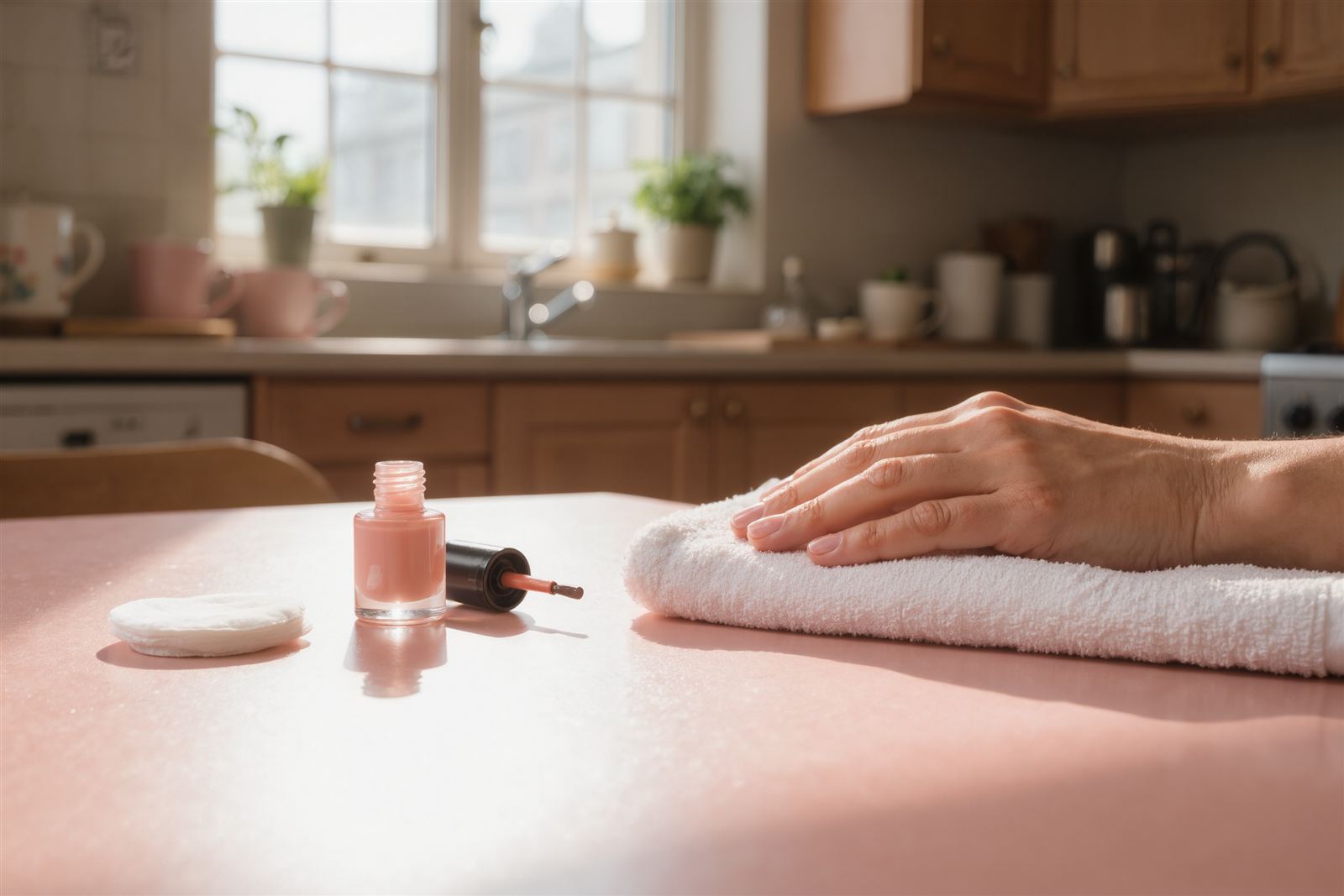
What you need
A basic manicure at home takes about half an hour and a short list of supplies: a fine nail file, a nail clipper, a soft buffer, a wooden or plastic stick for cuticles, nail polish remover, cotton pads, base coat, color, top coat and a hand cream or cuticle oil. The Cleveland Clinic suggests wooden or plastic sticks over metal tools because they are gentler on the nail, and says that any metal tool you do use must be sterilized. Keep everything together in a small box so it is easy to find.
Step by step
- Take off old polish. Press a remover-soaked cotton pad on the nail for a few seconds, then wipe from the cuticle to the tip. Use the remover in a room with good airflow, and keep it away from candles and stoves, as the FDA advises for products that can catch fire.
- Wash and dry your hands. Warm water softens the nail plate and cuticle.
- Trim. Cut nearly straight across and round the corners with a file.
- File. Use a fine file, in one direction, from the side toward the center. Do not saw back and forth.
- Look after cuticles. Apply cuticle oil and ease the skin back with a wooden or plastic stick, gently. Do not cut cuticles.
- Buff lightly. A soft buffer smooths ridges. Skip this on thin or weak nails.
- Wipe the nail. A pad with a little remover clears oils so the polish sticks.
- Base coat. One thin coat protects the nail and helps color last.
- Color. Two thin coats look better than one thick one. Wait a minute between coats and cap the tip by running the brush along the edge.
- Top coat. Seal the color and extend wear. Reapply on day three or four to refresh the shine.
- Moisturize. Finish with hand cream and a drop of cuticle oil, and repeat daily.
Tips that make polish last
- Work in thin coats. Thick coats stay soft underneath and smudge.
- Keep polish off the skin. If it gets there, use a small brush dipped in remover to clean the edge before it dries.
- Do not shake the bottle. Roll it between your palms to mix it.
- Wear gloves for dishes and cleaning.
- Choose a formaldehyde-free polish if your nails are brittle. The FDA lists formaldehyde among ingredients in some hardeners and polishes that can cause brittleness, irritation or allergies.
Between polish changes
Give nails a rest between sets. A week bare lets you see the nail clearly and moisturize it. Nails that look dry in winter will do better with the routine in the winter care guide. If you wear gel or dip at home or at a salon, remove it by soaking, never peeling, and read the comparison of manicure types first.
When to go to a salon
Some jobs are easier with a professional: extensions, detailed nail art, a long spa pedicure or gel removal if you are not comfortable with acetone. When you do book, use the checklist and the directory to find a place near you.
Questions people ask
What order do I do a manicure in?
Remove old polish, wash, trim, file, care for cuticles, wipe the nail clean, then base coat, two coats of color, top coat and hand cream.
How do I make polish last longer?
Use thin coats, a base coat and a top coat, cap the free edge, and wear gloves for chores. Refresh the top coat after a few days.
Do I need to cut my cuticles?
No. Dermatologists quoted by the Cleveland Clinic advise leaving cuticles in place. Soften them and ease them back gently with a wooden or plastic stick.
Is it safe to use nail polish remover indoors?
Use it with good airflow and away from heat sources. The FDA says some nail products can catch fire near heat, and it advises good ventilation.
How long should I wait between polish changes?
There is no set interval, but nails benefit from bare days. Moisturize and use cuticle oil when polish is off.
Sources: [1] health.clevelandclinic.org [2] fda.gov [3] health.clevelandclinic.org