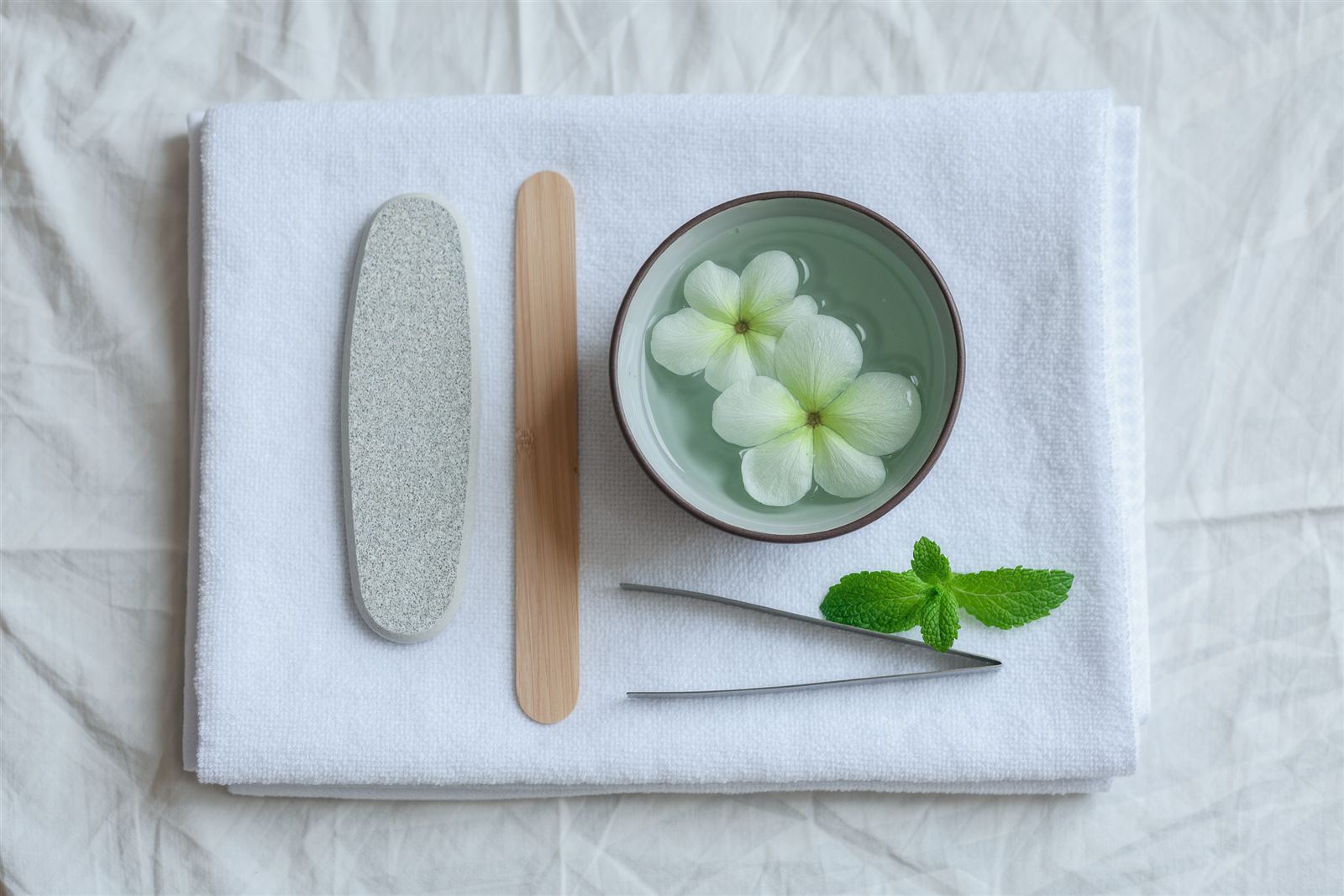
What a pedicure actually involves
A pedicure is a sequence of small steps, and most of them are the same whether you book a quick polish change or a long spa service. Knowing the order helps you ask for what you want and notice if a step is skipped. The usual sequence is a soak, nail trimming and shaping, cuticle care, smoothing the rough skin on the heels and soles, a massage with lotion or oil, and polish. Longer services add a scrub, a mask or hot towels.
Step by step
- The soak. Feet go into warm water to soften skin and nails. Many salons use liners in the basin or clean and disinfect it between clients; it is fair to ask how yours is cleaned.
- Trimming and shaping. Toenails are best cut straight across so the corners do not curve into the skin. Your technician files the edges smooth.
- Cuticle care. Cuticles protect the nail from infection. Dermatology guidance cited by the Cleveland Clinic is to leave them alone and moisturize them; a technician can gently push back softened skin without cutting it.
- Smoothing. Rough skin on the heels is buffed with a file or a pumice stone. A little goes a long way; over-filing leaves the skin tender.
- Massage. Lotion or oil goes on the feet and lower legs. This is the part most people remember.
- Polish. A base coat, two coats of color and a top coat. Regular polish is quickest to dry; gel polish needs a lamp and is a different service.
Before you go
Wear loose pants or a skirt that is easy to roll up, and bring sandals or open shoes for the trip home so you do not smudge fresh polish. Tell the technician about any cuts, sores, fungal infections or skin conditions. If you have diabetes or circulation problems, talk to your health care provider before booking a pedicure, because small cuts heal slowly.
Keeping the result
Moisturize your feet once a day and again after showers. Keep the skin between your toes dry. Trim toenails straight across every few weeks and avoid digging into the corners. A pumice stone once a week keeps heels smooth between visits. Polish can stay on for several weeks, but if you wear it for a long stretch, take it off now and then and let the nails go bare, which gives you a chance to spot color changes or ridges.
Sandal season in Minneapolis
The July average in the Twin Cities is about 74.3 degrees Fahrenheit according to NOAA's 1991 to 2020 normals, and it is the stretch when toenails get the most attention, at the lakes, at street festivals and on the trails. A pedicure before a summer weekend is a common treat. In winter, many people book one for the opposite reason: boots and dry air are hard on feet. The seasonal guide covers both.
Where to go
Pedicure services are on the menu at nearly every salon in the Minneapolis directory. Spa-style salons such as those downtown and in Uptown typically list longer services with massage and masks; neighborhood salons often have a quicker basic option. Read choosing a nail salon before you book, and call to ask what is included and what it costs, because menus differ a good deal.
Questions people ask
How should toenails be trimmed?
Straight across, with the edges filed smooth. Cutting into the corners can lead to ingrown nails.
Should cuticles be cut in a pedicure?
Dermatologists quoted by the Cleveland Clinic advise leaving cuticles alone because they act as a barrier against infection. Pushing back softened skin gently and moisturizing is the safer route.
How long does a pedicure take?
A basic polish change is quicker, and a spa pedicure with a scrub, mask and massage takes longer. Ask the salon for the time when you book.
Is it safe to get a pedicure with diabetes?
Talk to your health care provider first. Small cuts and infections heal slowly with diabetes or poor circulation, so they can advise on precautions.
How do I keep polish from smudging on the way home?
Wear open shoes or sandals, bring loose pants, and ask the technician to finish with a quick-dry top coat.
How often should I get a pedicure?
There is no single rule. Many people go every several weeks in summer and less often in winter, and the best interval is whenever your feet and nails feel neglected.
Sources: [1] health.clevelandclinic.org [2] fda.gov [3] en.wikipedia.org