Start with the license
Minnesota licenses the people who do nails and the salons they work in. The state agency is the Minnesota Board of Cosmetologist Examiners, and its website offers a License Lookup for the public to find a licensed practitioner, salon or school. The Board describes a license as a sign that practitioners and salon owners meet standards for clean, safe environments. The FDA adds that state and local authorities regulate salons and license manicurists, while the FDA itself regulates the products. So before you book, ask whether the technician and the salon are licensed, and check the lookup if you are not sure.
The Board also takes complaints. If a service goes badly, its site has a page called How to File a Complaint. Report any allergic reaction to your doctor and then to the FDA, which tracks adverse events from nail products.
A short checklist for your first visit
- Cleanliness. Look at the stations, the footbaths and the floors. Surfaces should be tidy and tools should be stored properly.
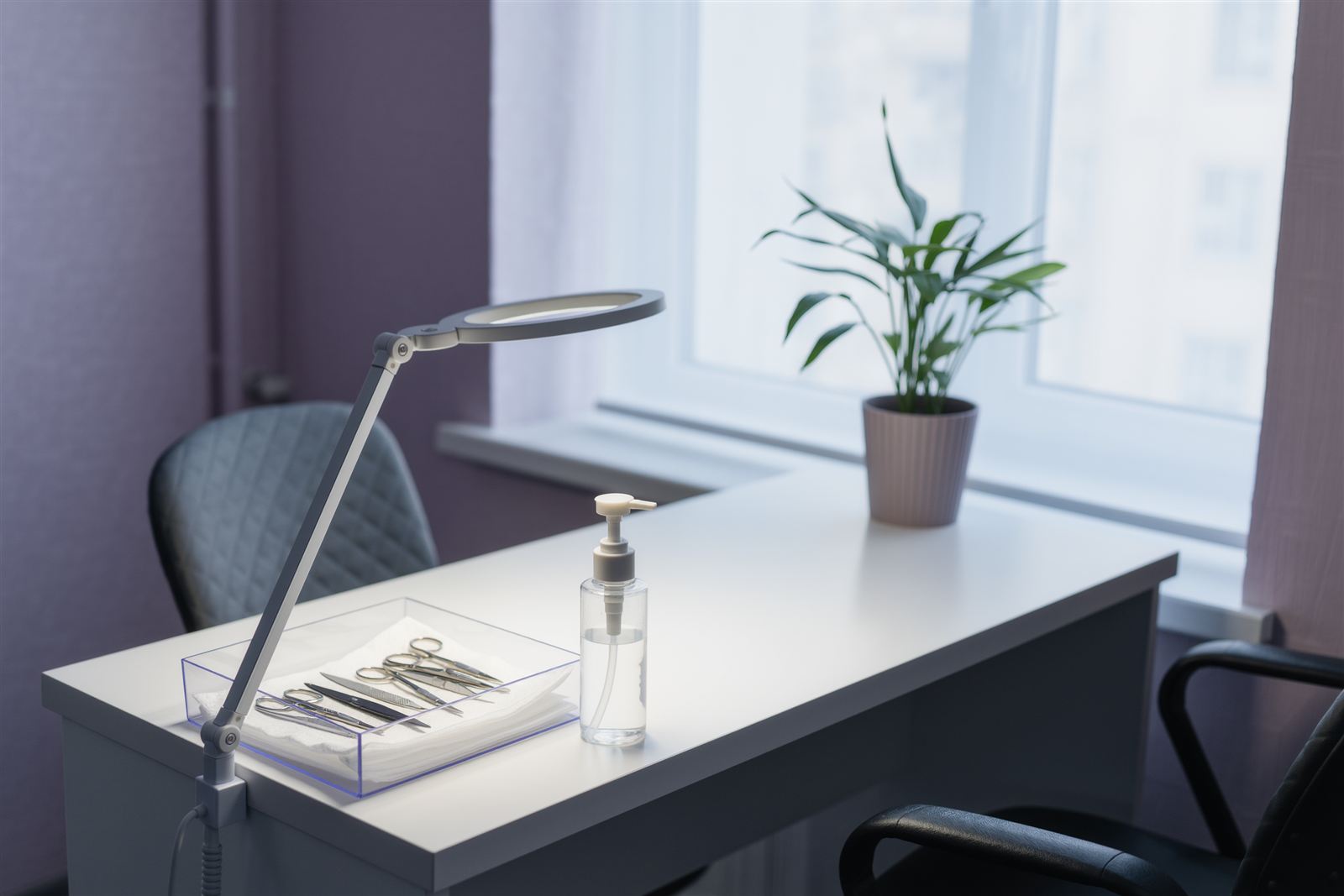
- Tools. Ask how files, buffers and metal tools are cleaned between clients. Some salons open a sealed pouch of sterilized tools in front of you, and some hand you a file to keep. Whichever method, you should get a clear answer.
- Ventilation. The FDA advises good ventilation when nail products are in use. A salon that smells strongly of chemicals all day may not have enough airflow.
- Products. Ask what is going on your nails, particularly if you are sensitive to acrylates or fragrances. Labels on retail products must list ingredients.
- Prices and time. Ask for the price of the full service before you sit down, including add-ons such as nail art, extra length, gel removal or paraffin.
- Booking. Many salons take appointments and walk-ins; some work by appointment only. Call or check the salon's website for current hours.
Match the salon to the service
Different Minneapolis salons lean different ways. Some are nail-only studios with a focus on art and extensions. Others are day spas that add facials, waxing and massage to manicures and pedicures. Neighborhood salons on commercial streets like Lake Street, Nicollet Avenue or France Avenue often combine a walk-in counter with appointments for longer services. The directory groups salons by area with address and phone so you can compare what is close to your home or work.
Signs to walk out
- The technician cuts or digs into your cuticles or the skin next to the nail.
- Tools are pulled from a shared cup, not cleaned, or reused without comment.
- Skin is cut and the service continues without stopping to clean the area.
- The technician pressures you into extra services you did not ask for.
It is always fine to stop a service and leave. Pay for what was done, and write down what happened in case you later need to tell the salon or the Board.
Looking after yourself afterward
Watch the skin around your nails for a few days. Redness that spreads, swelling, warmth or pain can mean an infection, and a health care provider is the right person to see. A mild itch or rash after gel or acrylic can be an allergic reaction to the product. See the guide on gel, dip, acrylic and regular polish for how the products differ, and healthy nails basics for how to care for the nail itself.
Questions people ask
How do I check a nail technician's license in Minnesota?
Use the License Lookup on the Minnesota Board of Cosmetologist Examiners website. It lets the public search for a licensed practitioner, salon or school. The Board notes it is a public service rather than an official verification.
Does a Minnesota nail salon need a license?
Yes. Minnesota licenses salons as well as individual practitioners, and the FDA notes that state and local authorities regulate salons and license manicurists.
Where do I report a problem with a salon?
The Board of Cosmetologist Examiners has a How to File a Complaint page. For a reaction to a product, tell your doctor and then report it to the FDA.
Should I book ahead or walk in?
Both work at different salons. Longer services such as extensions, art and spa pedicures usually go better with a booking. Call the salon to ask.
What should I ask about cleaning?
Ask how tools are cleaned between clients, whether files and buffers are single-use, and how footbaths are cleaned. A good salon answers plainly.
Is a chain or an independent salon better?
Neither is better by definition. Look at the license, the cleanliness and how the technician works on your nails. Compare prices for the same service.
Sources: [1] mn.gov [2] mn.gov [3] fda.gov